-
- APC Back UPS
- APC EASY UPS
- APC Modular UPS
- APC Smart SMC UPS
- APC Smart SMT UPS
- APC Smart SURT UPS
- APC SPM UPS
- APC Symmetra Power Module
- APC SYMMETRA LX
- APC Symmetra PX
- Eaton 5P UPS
- Eaton 5PX G2 UPS
- Eaton 93PR UPS
- Eaton 9PX Li-Ion UPS
- Eaton 9PX UPS
- Eaton 9SX Tower UPS
- Eaton DX RT UPS
- Eaton DX UPS
- Eaton Ellipse ECO UPS
- Eaton Marine UPS
- Eaton Power Module
- SANTAK UPS
- Schneider Galaxy 3L / EASY 3L UPS
- Schneider Galaxy VS UPS
- Schneider Galaxy VL UPS
- Vertiv UPS



UPS Power Evaluation (Part 1)

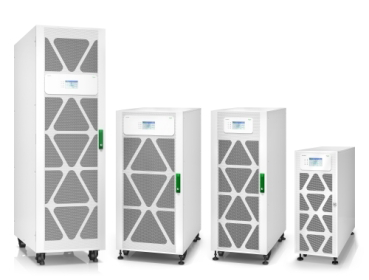
The purpose of testing UPS power supply is mainly to identify whether the actual technical indicators of UPS can meet the usage requirements. UPS testing generally includes two types: steady-state testing and dynamic testing. Steady state testing is conducted under no-load, 50% rated load, and 100% rated load conditions to test the phase voltage, line voltage, no-load loss, power factor, efficiency, output voltage waveform, distortion, and frequency of the input and output terminals. Dynamic testing generally tests the changes in the output voltage waveform of the UPS during sudden load changes (usually selecting loads from 0-100% and from 100% -0) to verify the dynamic characteristics and energy feedback path of the UPS.
1. Steady state testing
The so-called steady-state test refers to the test when the equipment enters the “normal system” state, which can generally measure waveform, frequency, and voltage.
waveform
Usually, when in unloaded and fully loaded states, observe whether the waveform is normal, and use a distortion meter to measure the distortion of the output voltage waveform. Under normal working conditions, when connected to a resistive load, the relative content of total harmonic in the output voltage should be measured using a distortion meter, which should meet the requirements specified by the product and generally be less than 5%.
frequency
Generally, an oscilloscope can be used to observe the frequency of the output voltage and a “power disturbance analyzer” can be used for measurement. At present, the output voltage frequency of UPS generally meets the requirements. But when the frequency circuit of the UPS and the local oscillator are not precise enough, it is also possible that the frequency of the UPS output voltage will change accordingly when the mains frequency is unstable. The accuracy of UPS output frequency can generally reach ± 0.2% when synchronized with the mains power.
output voltage
The output voltage of UPS can be tested and judged through the following methods:
A、 When the input voltage is 90% of the rated voltage, and the output load is 100% or the input voltage is 110% of the rated voltage, and the output load is 0, the output voltage should be maintained within the range of ± 3% of the rated value.
B、 When the input voltage is 90% or 110% of the rated voltage, and one phase of the output voltage is unloaded and the other two phases are 100% loaded, the output voltage should be maintained within the range of ± 3% of the rated value, and the phase difference should be maintained within 4 degrees.
C、 When the input DC voltage of the UPS inverter changes by ± 15% and the output load changes by 0-100%, its output voltage value should be maintained within the range of ± 3% of the rated voltage value. This indicator appears to be repetitive with the previously mentioned indicators, but in reality it requires higher standards than the previous indicators. This is because when the input signal of the control system changes over a large range, it exhibits obvious nonlinear characteristics. To ensure that the output voltage does not exceed the allowable range, the circuit requirements are even higher.
efficiency
The efficiency of UPS can be determined by measuring the output power and input power of the UPS. The efficiency of UPS mainly depends on the design of the inverter. Most UPS systems only have relatively high efficiency when the load is between 50% and 100%. When the load is below 50%, the efficiency drops sharply. The efficiency indicators provided by manufacturers are mostly under rated DC voltage and rated load conditions. It is best for users to choose the relationship curve between efficiency and output power, as well as the efficiency when the DC voltage changes