-
- APC Back UPS
- APC EASY UPS
- APC Modular UPS
- APC Smart SMC UPS
- APC Smart SMT UPS
- APC Smart SURT UPS
- APC SPM UPS
- APC Symmetra Power Module
- APC SYMMETRA LX
- APC Symmetra PX
- Eaton 5P UPS
- Eaton 5PX G2 UPS
- Eaton 93PR UPS
- Eaton 9PX Li-Ion UPS
- Eaton 9PX UPS
- Eaton 9SX Tower UPS
- Eaton DX RT UPS
- Eaton DX UPS
- Eaton Ellipse ECO UPS
- Eaton Marine UPS
- Eaton Power Module
- SANTAK UPS
- Schneider Galaxy 3L / EASY 3L UPS
- Schneider Galaxy VS UPS
- Schneider Galaxy VL UPS
- Vertiv UPS



UPS Power Supply Testing in Data Centers ( Part 2)

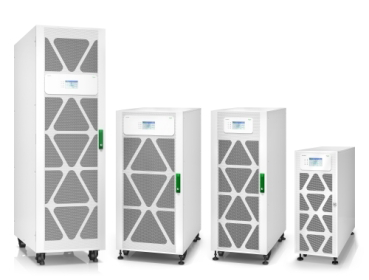
The basic content of power supply technology: Generally, the main content of power supply technology includes the following parts: power electronic devices, power conversion circuits, power supply units and systems, etc., power electronic devices:
(1) Uncontrolled devices: mainly various power diodes, including rectifier tubes, rectifier bridge modules, fast recovery diodes, power Schottky diodes, etc. that operate at power frequency.
(2) Semi-controlled devices: mainly thyristors (also known as silicon controlled rectifiers). Ordinary thyristors lose their control function after the device is turned on (hence the name semi-controlled). External conditions are required to turn off these devices.
(3) Fully controllable devices: Their control terminals not only have the ability to control the device to turn on, but also the ability to control it to turn off. Examples include high-power transistors (GTR), power field-effect transistors (MO5FET), gate turn-off (GTO) thyristors, MO5 controlled thyristors (Mσ), as well as newer insulated gate bipolar transistors (IGBT), electrostatic induction transistors (5π), etc.
(II) AC/DC Conversion Technology
Converting alternating current (AC) to direct current (DC) is called AC/DC conversion. In this conversion, the power flows from the power source to the load circuit, and this is generally called rectification. For applications requiring a change in the DC output voltage, phase-controlled rectification or other control schemes can be used. There are many types of rectifier circuits, each with its own characteristics. Their basic circuits can be broadly categorized as follows:
(1) Classified by the number of rectifier phases:
① Single-phase circuit: single pulse or double pulse;
② Three-phase circuit: 3-pulse, 6-pulse, or 12-pulse;
③ Multiphase circuit: P pulse.
(2) Classified by circuit control characteristics:
① Uncontrolled rectifier circuit;
② Semi-controlled rectifier circuit;
③ Fully controlled rectifier circuit.
DC/AC, DC/DC, AC/AC conversion technologies: This section briefly describes three conversion technologies: DC to AC, DC to DC, and AC to AC.
DC/AC conversion technology
Converting direct current (DC) to alternating current (AC) is called DC/AC conversion, commonly known as “inversion.” In certain special applications, such as satellites, airplanes, ships, and submarines, where there is no industrial frequency AC power (50 MHz or 10 Hz) and only batteries or solar panels are available (DC power sources), DC/AC conversion is necessary when AC loads need to be powered from these sources. Furthermore, industrial frequency AC power is not suitable for certain loads. For example, aircraft or related ground equipment use 400 Hz AC power, induction heating requires medium-frequency or high-frequency AC power, and variable frequency speed control of induction motors requires AC power that can be arbitrarily changed in frequency and voltage within a certain range. In applications where industrial frequency AC power is available, the AC power is first converted to DC, and then converted to AC power of the required frequency and voltage via an inverter. These applications all require DC/AC conversion technology.
With the development of power semiconductor devices, the application scope of inverter technology has been further broadened, and it has permeated almost all sectors of the national economy. In particular, the successful development of field control devices that combine high voltage, high current, and high frequency has laid the foundation for simplifying inverter circuits, improving inverter performance, and the widespread application of high-frequency pulse width modulation (PWM) technology.