-
- APC Back UPS
- APC EASY UPS
- APC Modular UPS
- APC Smart SMC UPS
- APC Smart SMT UPS
- APC Smart SURT UPS
- APC SPM UPS
- APC Symmetra Power Module
- APC SYMMETRA LX
- APC Symmetra PX
- Eaton 5P UPS
- Eaton 5PX G2 UPS
- Eaton 93PR UPS
- Eaton 9PX Li-Ion UPS
- Eaton 9PX UPS
- Eaton 9SX Tower UPS
- Eaton DX RT UPS
- Eaton DX UPS
- Eaton Ellipse ECO UPS
- Eaton Marine UPS
- Eaton Power Module
- SANTAK UPS
- Schneider Galaxy 3L / EASY 3L UPS
- Schneider Galaxy VS UPS
- Schneider Galaxy VL UPS
- Vertiv UPS


Future Data Center UPS Demand ( Part 5)

2) The second is “ease”, that is, ease of use and high availability.
Compared to the complex Tier 4 architecture and 2N systems designed to ensure reliability in traditional data centers, seemingly “unbelievable” solutions such as bypass mode and direct mains power supply + UPS backup are being adopted by internet giants. It is precisely the implementation of virtualization technology that has enabled internet companies to shift their focus from simply pursuing power supply reliability to prioritizing availability, represented by rapid maintenance.
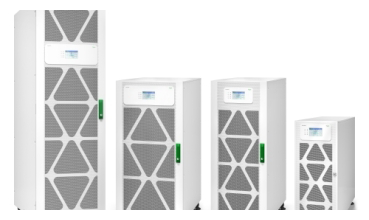
Therefore, UPS systems must be as easy to maintain as IT equipment. This places two requirements on UPS systems: 1. Failures should not affect business operations, i.e., they should not disrupt normal power supply; 2. Maintenance should be convenient after a failure, ideally allowing maintenance personnel to perform maintenance themselves without contacting the manufacturer. Clearly, modular UPS systems best meet these requirements. Both AC modular UPS systems and DC modular UPS systems (high-voltage DC) demonstrate higher availability and ease of maintenance.
3) Then there is “saving”, which means saving money.
Space saving: Most small and medium-sized data centers are currently built in buildings where space is extremely limited, and high density has always been a common pursuit for IT equipment, such as blade servers. UPS with higher power density and smaller size can save users more space, and for companies providing rental services, it means that more IT equipment can be deployed for leasing. On the other hand, as mentioned earlier, infrastructure convergence has become one of the trends in data center development, and UPS with higher power density will make it easier to achieve integrated deployment with service, storage and other IT equipment.
Electricity Cost Savings: High electricity costs also make users prefer high-efficiency UPS systems, as they not only have lower losses but also reduce energy consumption for cooling. It’s important to note that while most manufacturers claim to offer high-efficiency UPS systems, the impact of load rate must still be considered. For most data centers, the actual load rate of a UPS will not exceed 30% (even as low as 10% in newly built data centers). With the implementation of virtualization technology and increased CPU utilization, the actual load rate of a UPS generally will not exceed 40% (taking a 1+1 system as an example). Therefore, only UPS systems that can achieve over 94% efficiency at low load rates (20%~40%) best meet the actual needs of data centers.