-
- APC Back UPS
- APC EASY UPS
- APC Modular UPS
- APC Smart SMC UPS
- APC Smart SMT UPS
- APC Smart SURT UPS
- APC SPM UPS
- APC Symmetra Power Module
- APC SYMMETRA LX
- APC Symmetra PX
- Eaton 5P UPS
- Eaton 5PX G2 UPS
- Eaton 93PR UPS
- Eaton 9PX Li-Ion UPS
- Eaton 9PX UPS
- Eaton 9SX Tower UPS
- Eaton DX RT UPS
- Eaton DX UPS
- Eaton Ellipse ECO UPS
- Eaton Marine UPS
- Eaton Power Module
- SANTAK UPS
- Schneider Galaxy 3L / EASY 3L UPS
- Schneider Galaxy VS UPS
- Schneider Galaxy VL UPS
- Vertiv UPS



UPS energy consumption calculation and power saving techniques for computer rooms

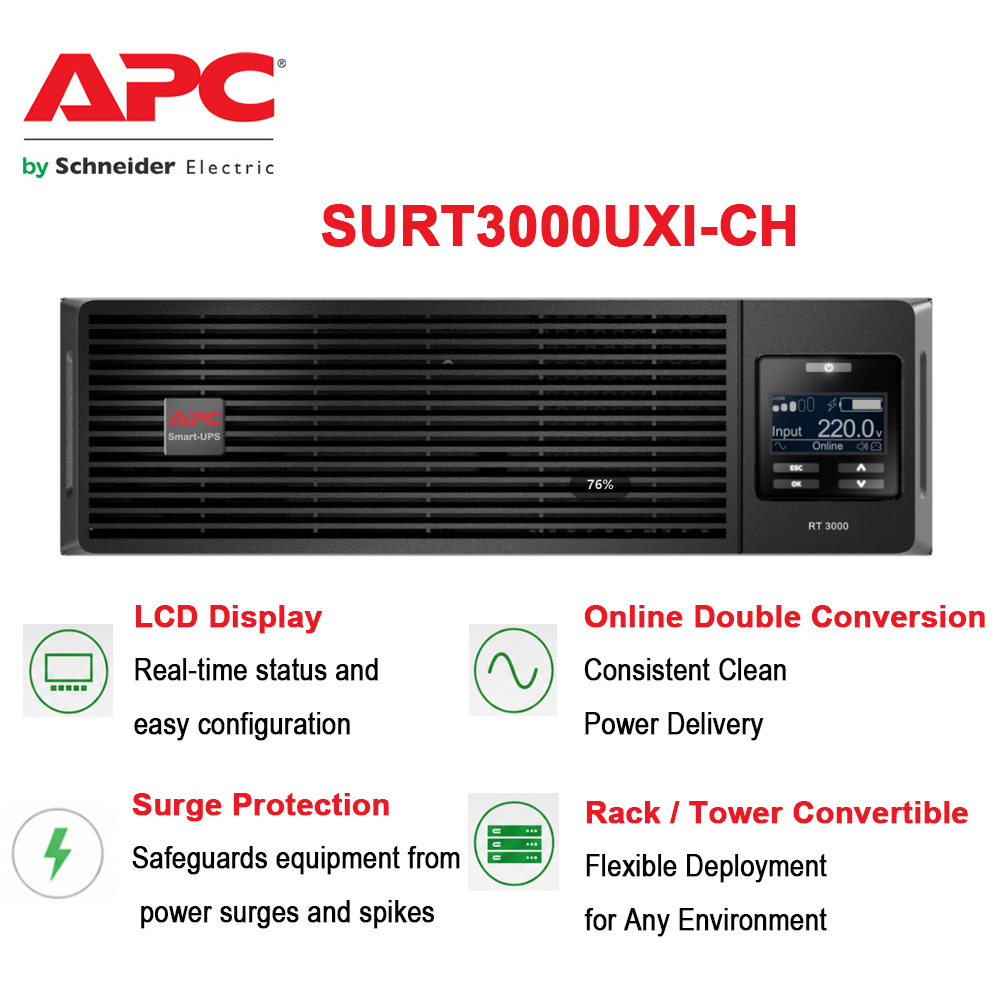
In data center operations and maintenance, UPS ( Uninterruptible Power Supply ) is not only a crucial piece of equipment for power security, but also a major energy consumer. How can we accurately calculate this “electricity bill” and save real money while ensuring safety? Chengdu Hongwei will now discuss the intricacies of this from two aspects: energy consumption calculation and energy-saving techniques.
To calculate energy consumption, first understand these two formulas.
Many people mistakenly believe that the “VA” on a UPS nameplate represents the actual power consumption, but this is incorrect. A UPS’s rated capacity is measured in volt-amperes (VA), while electricity bills are calculated in watts (W). The difference lies in the power factor. A general calculation can be made using the formula: W = VA × power factor. The power factor for equipment like servers is typically around 0.8.
Another concept to pay attention to is load rate. UPS efficiency is generally around 87-88% at 50-60% load. Prolonged light or full load will increase additional losses. UPS power consumption = output power ÷ efficiency – output power. The lower the efficiency, the larger the difference – this is essentially wasted “heat money,” which will also increase the burden on air conditioning.
Here are some clever ways to save electricity: start with these points.
Choosing the right model is a prerequisite. Compared to traditional line-frequency UPS, high-frequency modular UPS is more than 5% more efficient under light loads and supports intelligent sleep technology —automatically allowing some modules to “take turns resting” when the load is low, keeping the overall efficiency at a high level. Taking a 600kVA UPS as an example, every 1% increase in efficiency can save approximately 210,000 kWh of electricity over ten years.
Proper capacity planning is crucial. Don’t overextend yourself; reserve 20-30% redundancy based on actual load. Excessive capacity leading to prolonged periods of light load operation is inherently wasteful.
Don’t forget the associated losses from air conditioning. Almost all the electrical energy lost by the UPS is converted into heat, increasing the cooling load on the server room. Replacing the UPS with a high-efficiency one not only saves electricity for the equipment itself but also indirectly reduces air conditioning power consumption—a win-win situation. Calculating energy consumption is “knowing,” using the right techniques is “doing.”