-
- APC Back UPS
- APC EASY UPS
- APC Modular UPS
- APC Smart SMC UPS
- APC Smart SMT UPS
- APC Smart SURT UPS
- APC SPM UPS
- APC Symmetra Power Module
- APC SYMMETRA LX
- APC Symmetra PX
- Eaton 5P UPS
- Eaton 5PX G2 UPS
- Eaton 93PR UPS
- Eaton 9PX Li-Ion UPS
- Eaton 9PX UPS
- Eaton 9SX Tower UPS
- Eaton DX RT UPS
- Eaton DX UPS
- Eaton Ellipse ECO UPS
- Eaton Marine UPS
- Eaton Power Module
- SANTAK UPS
- Schneider Galaxy 3L / EASY 3L UPS
- Schneider Galaxy VS UPS
- Schneider Galaxy VL UPS
- Vertiv UPS


What are the functional differences between a regular PDU and a smart PDU?

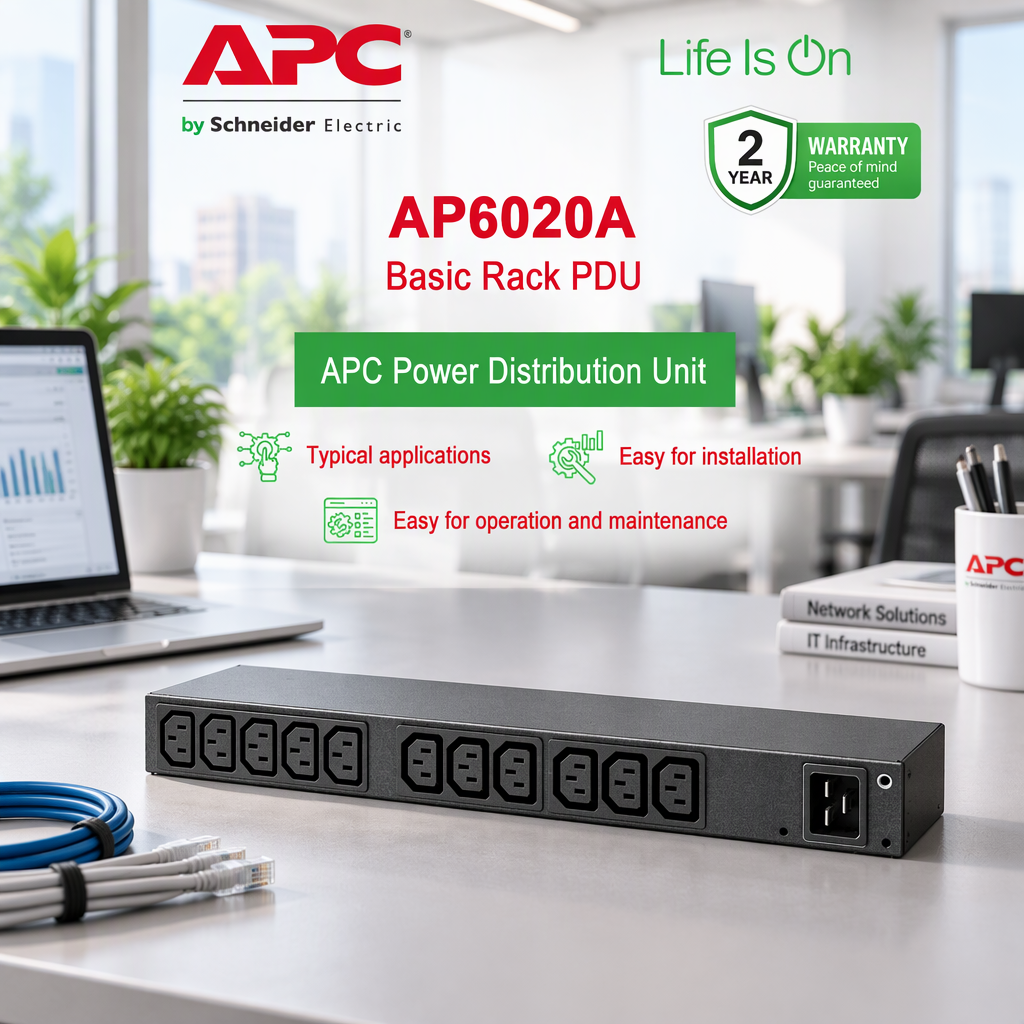
Ordinary PDUs and smart PDUs differ significantly in terms of functionality and application scenarios. The following is a comparison of their core characteristics:
Standard PDU (Basic Power Distribution Unit)
• Core function: It only realizes basic power distribution, converting a single power input into multiple socket outputs to meet the power supply needs of multiple devices.
• Features: Simple structure, no data monitoring or remote control functions; low cost, suitable for scenarios with no special requirements for power management, such as power supply for ordinary office equipment.
• Advantages: Low price, easy installation and use.
• Limitations: It cannot monitor power parameters such as voltage and current, cannot be operated remotely, and requires on-site troubleshooting in case of power supply problems.
Intelligent PDU ( Intelligent Power Distribution Unit )
• Core functions: An intelligent management module has been added to the basic power supply distribution, supporting functions such as power monitoring and remote control.
• Features:
◦ It can monitor parameters such as voltage, current, power, and temperature in real time, and some models support alarms for overload and short circuit;
• Enables remote switching of sockets and restarting of devices via network (Ethernet, IP, etc.);
Some models support load balancing management , external environmental sensors (temperature, humidity, smoke detectors, etc.), and even integration with rack management systems .
• Advantages: Improves power supply security and equipment management efficiency, facilitates remote operation and maintenance, and is suitable for scenarios with high power stability requirements, such as data centers and server rooms.
• Limitations: Higher cost than ordinary PDUs, and requires the use of corresponding management systems or network environments.