




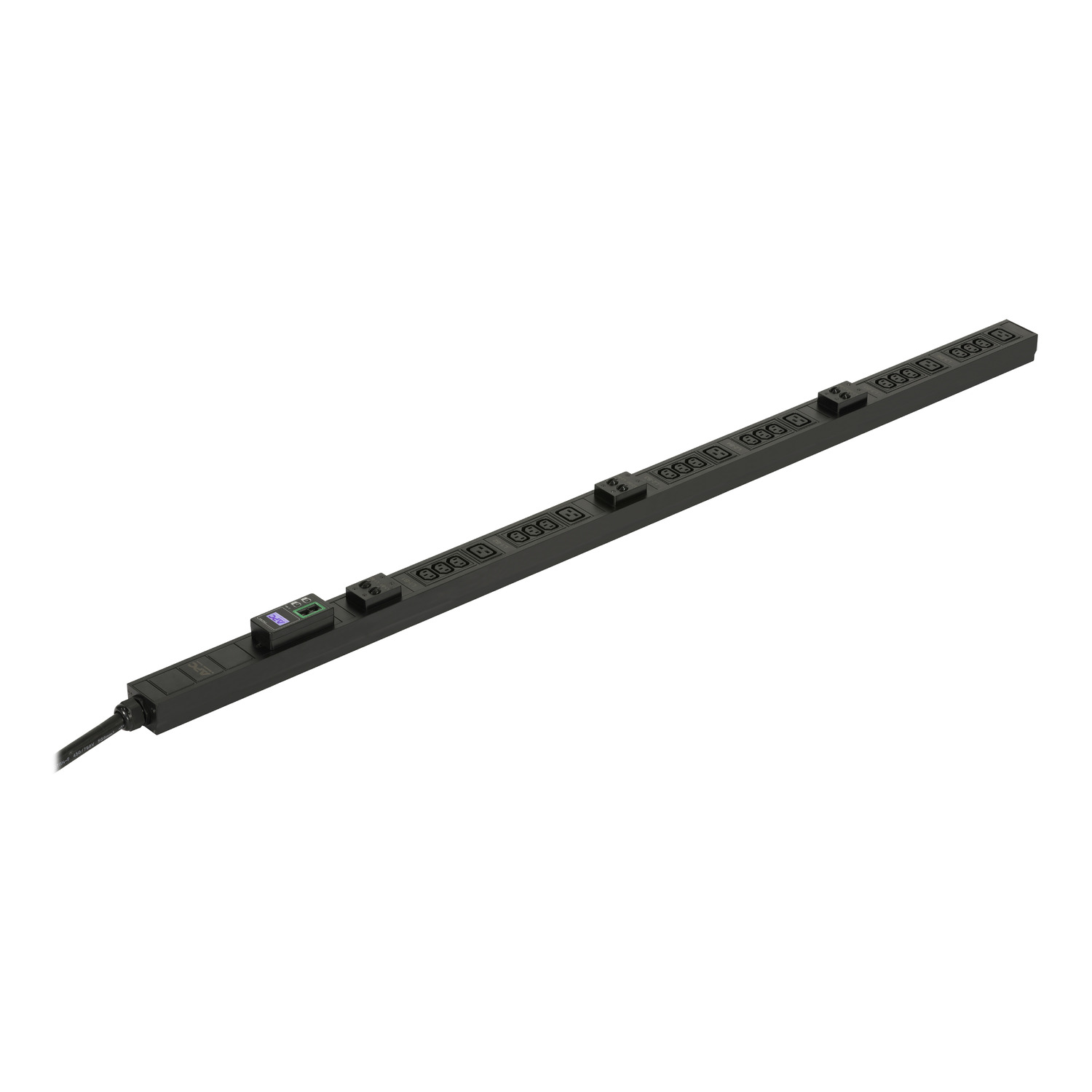
We typically don’t pay much attention to the power supplies of electronic devices. However, a PDU (Power Distribution Unit) is not just a regular power distribution panel; it supplies power to server racks or cabinets, allowing us to house IT equipment. Therefore, there are many factors to consider when selecting the right PDU for a data center!
Generally, there are two basic types of server rack PDUs: horizontal PDUs typically occupy 1U to 2U of rack space and are specifically installed on the equipment rails of 19-inch or 24-inch racks. Vertical PDUs are the more common type of PDU nowadays and are specifically installed at the rear of the rack.
Today, we’ve compiled a list of “7 Essential Questions to Know When Choosing a PDU”.
1. The number of its output sockets
The number of sockets a vertical PDU has depends on its length; the length of the PDU depends on the height of the server rack. A basic vertical PDU typically has at least 40 sockets arranged in an alternating configuration. Some PDUs divide the circuitry into multiple branches, each with its own fuse or circuit breaker. Alternating phase PDUs distribute power to each socket.
2. Are the output sockets categorized by color?
Traditional PDU output outlets are categorized by branches, and as rack density increases, cable management and load balancing become major challenges. If the load is not properly balanced, data center managers may face the risk of circuit overload or power outages.
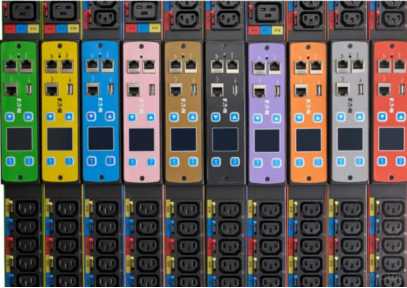
Color-coded output sockets make it easier for IT staff to identify circuit configurations.
Color-coded output sockets make it easier for IT personnel to identify circuit configurations, significantly simplifying the deployment process and reducing the risk of power overload. The alternating phase design of the output sockets for multiple PDUs facilitates cable bundling, simplifies wiring management, improves load balancing efficiency, and allows for a higher density of power sockets within the same space.
3. PDU volume
Even though a 0U PDU doesn’t take up much space, we still need to consider its size and its impact on heat dissipation and cabling management. A minimalist, thin design improves operational efficiency and airflow, which is crucial for environments using multiple PDUs to support redundant power supplies.