-
- APC Back UPS
- APC EASY UPS
- APC Modular UPS
- APC Smart SMC UPS
- APC Smart SMT UPS
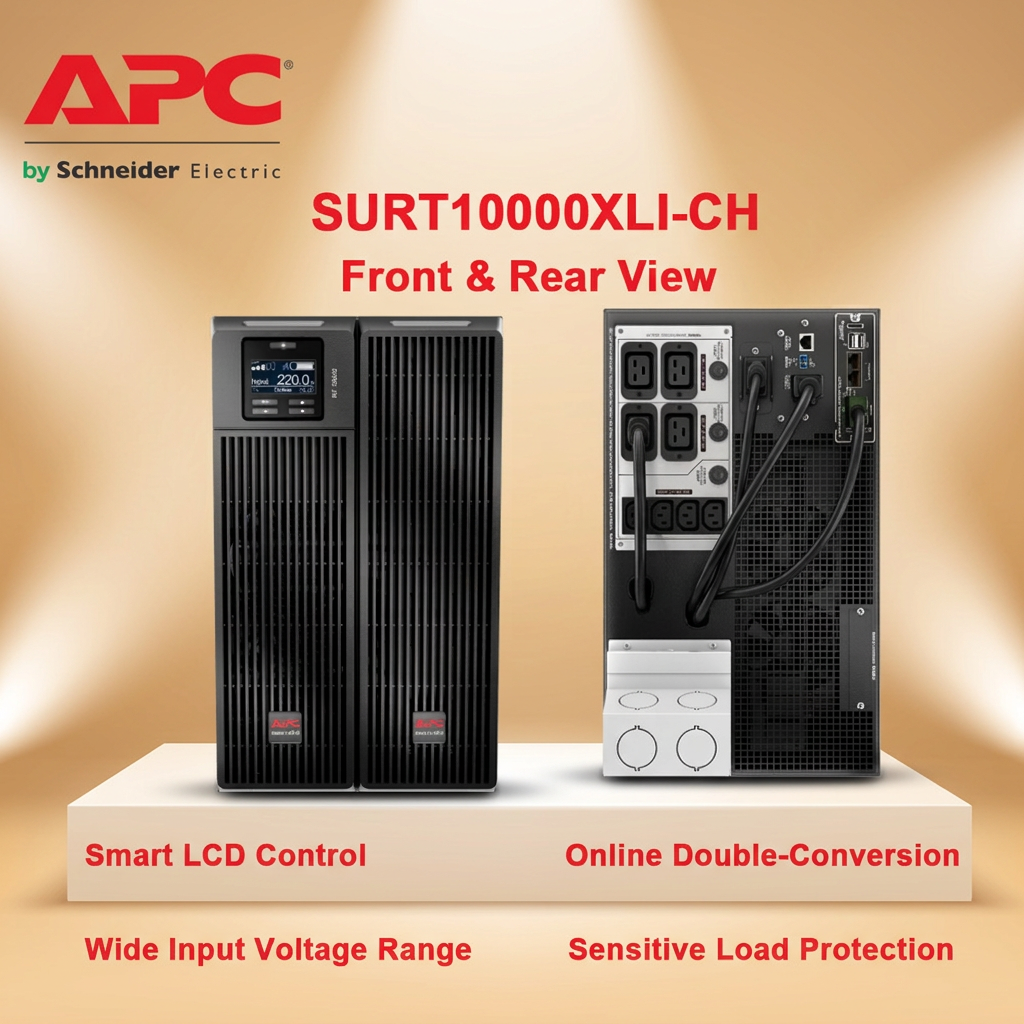
- APC Smart SURT UPS
- APC SPM UPS
- APC Symmetra Power Module
- APC SYMMETRA LX
- APC Symmetra PX
- Eaton 5P UPS
- Eaton 5PX G2 UPS
- Eaton 93PR UPS
- Eaton 9PX Li-Ion UPS
- Eaton 9PX UPS
- Eaton 9SX Tower UPS
- Eaton DX RT UPS
- Eaton DX UPS
- Eaton Ellipse ECO UPS
- Eaton Marine UPS
- Eaton Power Module
- SANTAK UPS
- Schneider Galaxy 3L / EASY 3L UPS
- Schneider Galaxy VS UPS
- Schneider Galaxy VL UPS
- Vertiv UPS


UPS power supply system strategy for computer room, redundant power supply equipment ( part 1)

The reliability of the power supply system directly affects the normal operation of data center equipment, involving the production and broadcast quality of information storage, program recording, editing and transmission, and audio-visual data. To ensure that the operation of the UPS power supply system in the data center is more scientific, safe and reliable, electrical professionals need to carry out top-level design in the current layout planning and management of the UPS power supply system in the data center. This involves clarifying various technical indicators and elements, combining lean and refined control measures, and defining various management standards, which is particularly important for ensuring the normal operation of the power supply system.
1. Data Center Equipment Classification and Power Supply Characteristics Analysis
Data center power supply equipment is divided into single power supply and redundant power supply equipment. Specifically, a single power supply refers to a single power module. When there is a power supply problem in the data center equipment, it is usually caused by a fault in the power supply itself. At this time, the equipment in the data center will be in standby mode. Redundant power supply equipment is mainly composed of multiple power modules. This type of equipment is also called dual power supply equipment. Multiple power supplies bear the power supply load of the entire system. If the power module group has a problem or cannot supply power normally, the remaining modules can provide the corresponding power load to ensure the normal power supply of the equipment.
2. Allocation of power supply system reliability
Typically, a power supply system includes multiple devices and facilities, such as surge protectors, cables, switches, UPS, battery packs, PDUs , and various connectors. Each component and each piece of equipment must possess high reliability and stability to ensure the entire power supply system functions properly. In the process of allocating and managing the reliability of a power supply system, electrical technicians need to fully adhere to the principle of weakest link control. The overall operational reliability of the entire system often depends on a single component or link with lower reliability. Therefore, in the allocation and management of power supply system reliability, resource allocation and management must strictly refer to the weakest link to ensure the entire system functions as intended. For example, configuring a 65A circuit breaker at the output of a common 10kV UPS is relatively common. Simultaneously, in electronic systems, electrical technicians also need to ensure that the connections between each system and each component are secure. Specifically, due to the common single… The rated current of a 10kV circuit breaker is 45A. Considering the need to enhance the system’s overload capacity by 20%, a 65A circuit breaker is generally selected to protect the system. If there are special requirements in this aspect, the current value needs to be recalculated. If a 32A or 100A circuit breaker is selected blindly, it will not meet the needs of the entire system operation. For example, selecting a 32A circuit breaker will result in frequent load interruptions, while selecting a 100A circuit breaker will cause a short circuit at the output terminal, resulting in the inability to protect the power supply. In short, if the allocation of the reliability current value does not meet the specific operational requirements of the system equipment, it will lead to the entire system failing to operate or operating malfunctions.
Through on-site investigation and analysis, it can be seen that in the process of allocating and managing the reliability of the entire data center power supply system, electrical technicians need to integrate the comprehensive reliability values of various equipment and facilities to complete comprehensive evaluation and control. For example, in this stage, it is necessary to analyze the operational reliability of the system’s surge protectors, the operational reliability of cable facilities, and the operational reliability of switch cabinets, generators, UPS, battery packs, PDUs, and various other equipment. Then, the operational reliability of each structural unit and structural part is multiplied, and through the assignment and analysis of specific function values, the final reliability of the entire system can be obtained.