




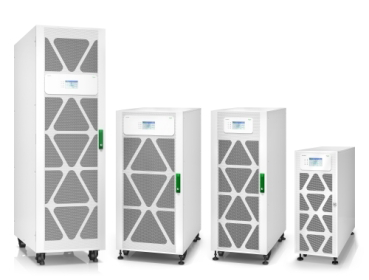
To ensure stable and reliable computer operation and accurate and secure data, UPS power supplies are increasingly being used in computer rooms. Some even call UPS power supplies the guardian of computers, making their safe operation paramount. This article shares the classification and application of UPS power supply technology, as well as the AC/DC conversion technology, integrated voltage regulators, and power conversion circuits that must be tested in UPS power supplies.
(I) Classification and Application of UPS Power Supply Technology
(1) Energy is stored in some form during normal times and then converted into electrical energy to supply the load when needed. Typical equipment is the various storage batteries that people often see.
(2) Converting other forms of energy into electrical energy, such as hydropower, thermal power, wind power and nuclear power generation, is generally referred to as a primary power source (commonly known as the power grid or mains power).
(3) In the process of power transmission, the power is converted or stabilized between the primary power source and the load. This type of power source is generally called a secondary power source (i.e., controlling the existing power source).
This section primarily describes secondary power supplies, which transform input power (such as that from the power grid) into electrical energy that meets requirements in terms of voltage, current, frequency, waveform, stability, and reliability (including electromagnetic compatibility, insulation, heat dissipation, uninterrupted power supply, and intelligent monitoring) to supply power to the load. This is currently the most widely used field of power supply technology, mainly studying how to use electronic technology to convert and control electrical power. It extensively utilizes theories from electromagnetic technology, electronic technology, computer technology, and materials technology, and has strong comprehensiveness. In engineering, this field of technology is generally referred to as “power supply technology.”
To distinguish them from other methods, power supply devices constructed using electronic technology are generally called “electronic power supplies.” Electronic power supplies operate at frequencies ranging from low frequencies (a few hertz) to high frequencies (megahertz), with output voltages ranging from a few volts to tens of kilovolts, and output currents ranging from microamperes to tens of thousands of amperes. With the development of science and technology, the requirements for power supply technology are becoming increasingly stringent, with more and more specifications and varieties, increasing technical difficulty, and involving a wider range of academic fields. Technically speaking, they can be divided into three categories:
(1) DC power supply: The input power supply can be AC or DC, and can be single-phase AC or three-phase AC. The output is DC (including voltage regulation or current regulation), including linear control and switching control.
(2) AC power supply: The input power supply is mostly single-phase or three-phase AC power, and the output is still AC power (single-phase or three-phase; when the input is DC power, it is called an inverter), including types such as voltage stabilization, current stabilization, frequency stabilization, and uninterruptible power supply.
(3) Special power supply (or industrial power supply): such as electroplating, electrolysis, welding, laser, high voltage and other types of power supply. The input is mostly AC mains power, and the output can be DC, AC or pulse form.