



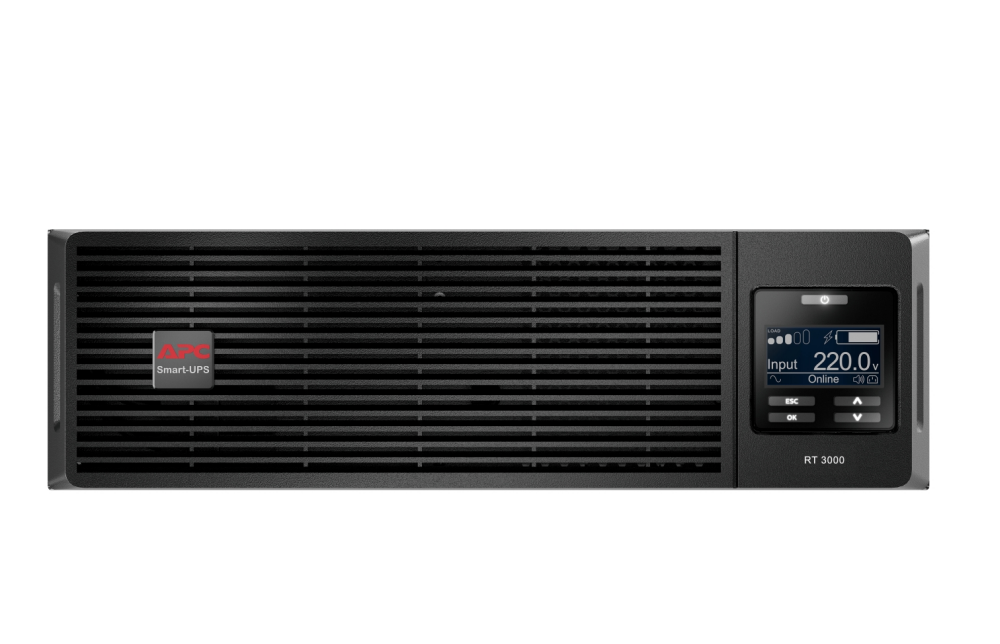
To improve the quality of UPS power supply operation in the computer room, strengthen daily management, and ensure that the UPS uninterruptible power supply equipment is always in a good environment and operates safely and stably, let’s look at the service life of UPS uninterruptible power supplies and how to maintain them to extend their lifespan.
Many people are curious about the lifespan of a dedicated UPS (Uninterruptible Power Supply) for server racks in data centers. This depends on the operating environment, maintenance and upkeep, and the company’s attitude towards older UPS systems. Inefficiency, insufficient capacity, and poor operating environments, such as excessively high temperatures, excessive dust, or humidity, will all shorten the UPS’s lifespan. Inadequate maintenance and upkeep will also shorten the UPS’s lifespan.
For example, the fan and capacitor must be replaced within 5-7 years. If none of the above are problems, the UPS can be used indefinitely. The lifespan of lead-acid batteries is greatly affected by battery quality, ambient humidity, number of charge and discharge cycles, and charge and discharge procedures. Ideally, in a constant humidity environment of 20-25 degrees Celsius, with infrequent charging and discharging (no more than two or three times a month), regular battery maintenance, and good battery and UPS quality, it can last for more than 15 years. Of course, the longer it is used, the less the remaining capacity will be… The longest I have seen a UPS last for more than 15 years.
Normally, a UPS power supply has a lifespan of 8-10 years, and a properly maintained UPS can last for more than 15 years. Many data centers in the United States have used their UPS power supplies for around 20 years without ever replacing them. This is largely due to the core component of the power supply: the battery. Below, we will introduce UPS power supply maintenance and how to extend its lifespan.
UPS power supply maintenance
An uninterruptible power supply (UPS) is a constant voltage and frequency power supply containing an energy storage device and with an inverter as its main component. It is primarily used to provide uninterrupted power to single computers, computer network systems, or other power electronic equipment. When the mains input is normal, the UPS stabilizes the mains voltage and supplies it to the load; in this state, the UPS acts as an AC mains voltage regulator while simultaneously charging its internal battery. When the mains power is interrupted (power outage), the UPS immediately uses the energy from its internal battery to continue supplying 220V AC power to the load through an inverter, ensuring the load continues to operate normally and protecting the load’s hardware and software from damage. UPS devices typically provide protection against both overvoltage and undervoltage.
Data center alarms are divided into the following three levels:
Main alarms : primarily alarms from ventilation equipment groups (mainly fresh air units and exhaust fans).
Critical alarms include: air conditioning and environmental monitoring equipment (precision air conditioners, dedicated cabinet air conditioners for computer rooms, temperature and humidity monitoring, water leakage monitoring, and surge protectors);
Emergency alarms include fire protection, power supply and distribution, and UPS equipment groups (fire protection system control box, UPS, battery, power distribution switch status, power distribution cabinet, ATS status).