-
- APC Back UPS
- APC EASY UPS
- APC Modular UPS
- APC Smart SMC UPS
- APC Smart SMT UPS
- APC Smart SURT UPS
- APC SPM UPS
- APC Symmetra Power Module
- APC SYMMETRA LX
- APC Symmetra PX
- Eaton 5P UPS
- Eaton 5PX G2 UPS
- Eaton 93PR UPS
- Eaton 9PX Li-Ion UPS
- Eaton 9PX UPS
- Eaton 9SX Tower UPS
- Eaton DX RT UPS
- Eaton DX UPS
- Eaton Ellipse ECO UPS
- Eaton Marine UPS
- Eaton Power Module
- SANTAK UPS
- Schneider Galaxy 3L / EASY 3L UPS
- Schneider Galaxy VS UPS
- Schneider Galaxy VL UPS
- Vertiv UPS


Top 10 Data Center Trends ( Part 1)

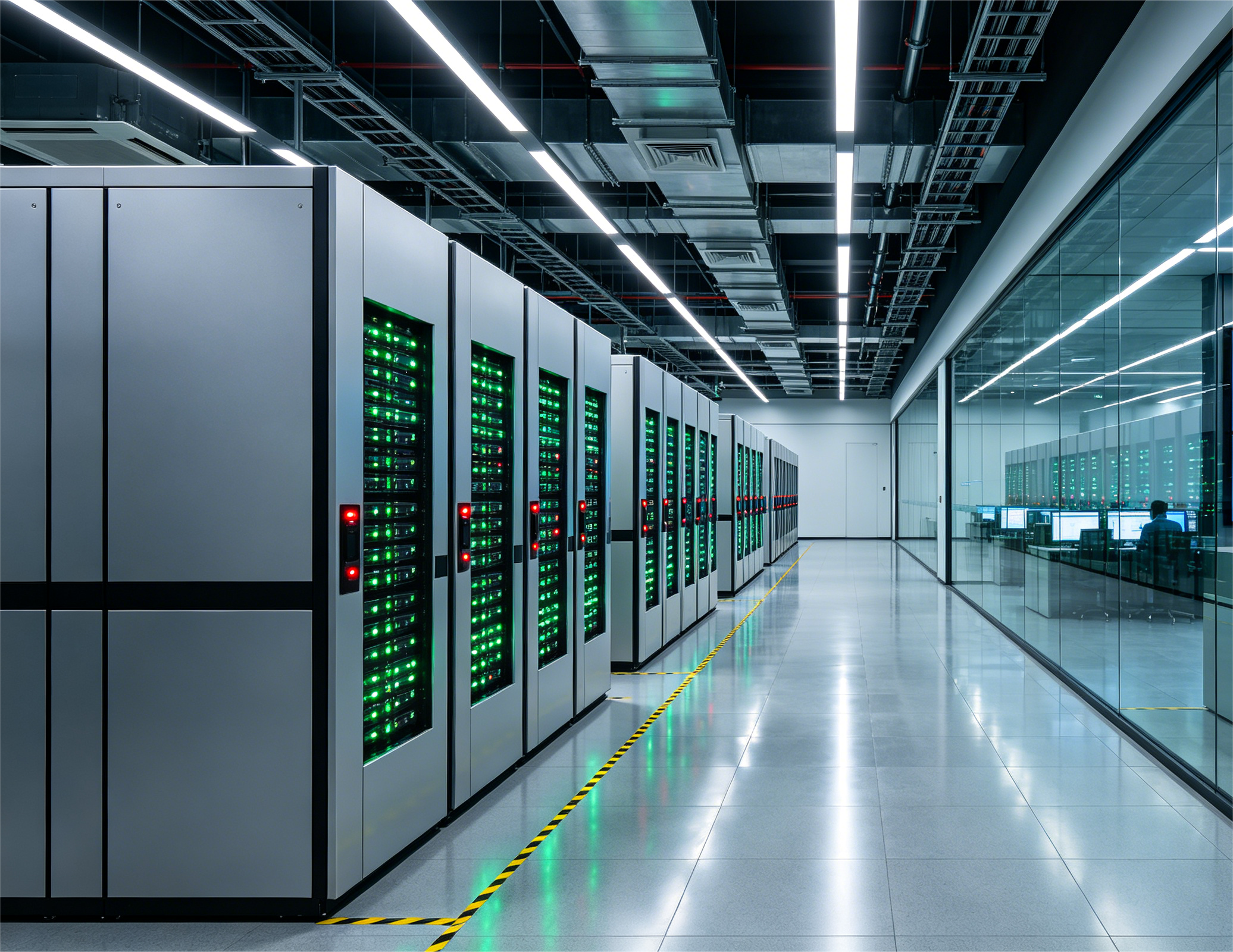
Trend 1: Prefabricated and modular construction becomes mainstream
The rise of large-scale computing models has led to an explosive growth in demand for intelligent computing power across various industries . According to IDC data, the compound annual growth rate of AI computing power in China will reach 52.3% from 2022 to 2026.
However, the construction of traditional data center server rooms requires multiple stages, including design, civil engineering, electromechanical installation, and commissioning. Under normal circumstances, it takes about 12 months to deliver a data center that can support 10,000 cards from the start of civil engineering.
However, with the rapid development of IT technologies such as AI, traditional construction methods simply cannot keep up. Therefore, prefabricated and modular data centers have emerged. Compared to traditional civil engineering data centers, the construction period can be shortened by more than 60%, with completion in 3 months and handover in 30 days.
Trend 2: Green technologies continue to deepen
With the advancement of the “dual carbon” strategy , the greening of data centers has permeated all aspects. 2025 is a critical milestone for data centers to achieve carbon neutrality, and multiple documents have put forward clear requirements for data center power utilization efficiency ( PUE ) and other parameters.
For data center operators, being recognized as a “National Green Data Center” signifies a first-mover advantage in future server hosting industry competition. Especially against the backdrop of “dual carbon” goals, green practices are shifting from an option to a necessity, and from a cost factor to a competitive advantage.
Trend 3: High-density development
Currently, the average power consumption per rack in a data center is 6-8 kW, and it is projected that by 2027, 15-20 kW per rack will become the mainstream. High-density computing loads are causing GPUs to gradually replace CPUs as the core of high-performance computing, which poses greater challenges to the power supply and cooling systems of data centers.
AI server racks require higher power density UPS systems, battery packs, power distribution and switching equipment to cope with large load fluctuations. At the same time, hybrid cooling systems will be more widely used, liquid cooling systems will work in conjunction with high-density UPS systems, and servers will increasingly be shipped with integrated liquid cooling systems to improve system energy efficiency.
Trend 4: Widespread adoption of flexible architecture
IT equipment typically has a lifespan of 3-5 years, with power density doubling every 5 years, while data center infrastructure has a lifespan of 10-15 years. This necessitates that data center infrastructure be resilient, supporting architectural flexibility and phased investment to meet the evolution of 2-3 generations of IT equipment with optimal CAPEX.
Furthermore, due to the different IT services they handle, data centers typically require a mixed deployment of IT equipment with varying power densities. For example, newly constructed data centers in Chengdu have adopted hyperconverged infrastructure (HCI) and software-defined networking (SDN) to break down traditional siloed architectures, achieve elastic resource allocation, reduce redundant energy consumption, and meet the needs of flexible allocation of data center resources in different business scenarios.