-
- APC Back UPS
- APC EASY UPS
- APC Modular UPS
- APC Smart SMC UPS
- APC Smart SMT UPS
- APC Smart SURT UPS
- APC SPM UPS
- APC Symmetra Power Module
- APC SYMMETRA LX
- APC Symmetra PX
- Eaton 5P UPS
- Eaton 5PX G2 UPS
- Eaton 93PR UPS
- Eaton 9PX Li-Ion UPS
- Eaton 9PX UPS
- Eaton 9SX Tower UPS
- Eaton DX RT UPS
- Eaton DX UPS
- Eaton Ellipse ECO UPS
- Eaton Marine UPS
- Eaton Power Module
- SANTAK UPS
- Schneider Galaxy 3L / EASY 3L UPS
- Schneider Galaxy VS UPS
- Schneider Galaxy VL UPS
- Vertiv UPS


Top 10 Data Center Trends ( Part 2)

Trend 5: Rapid delivery becomes the norm
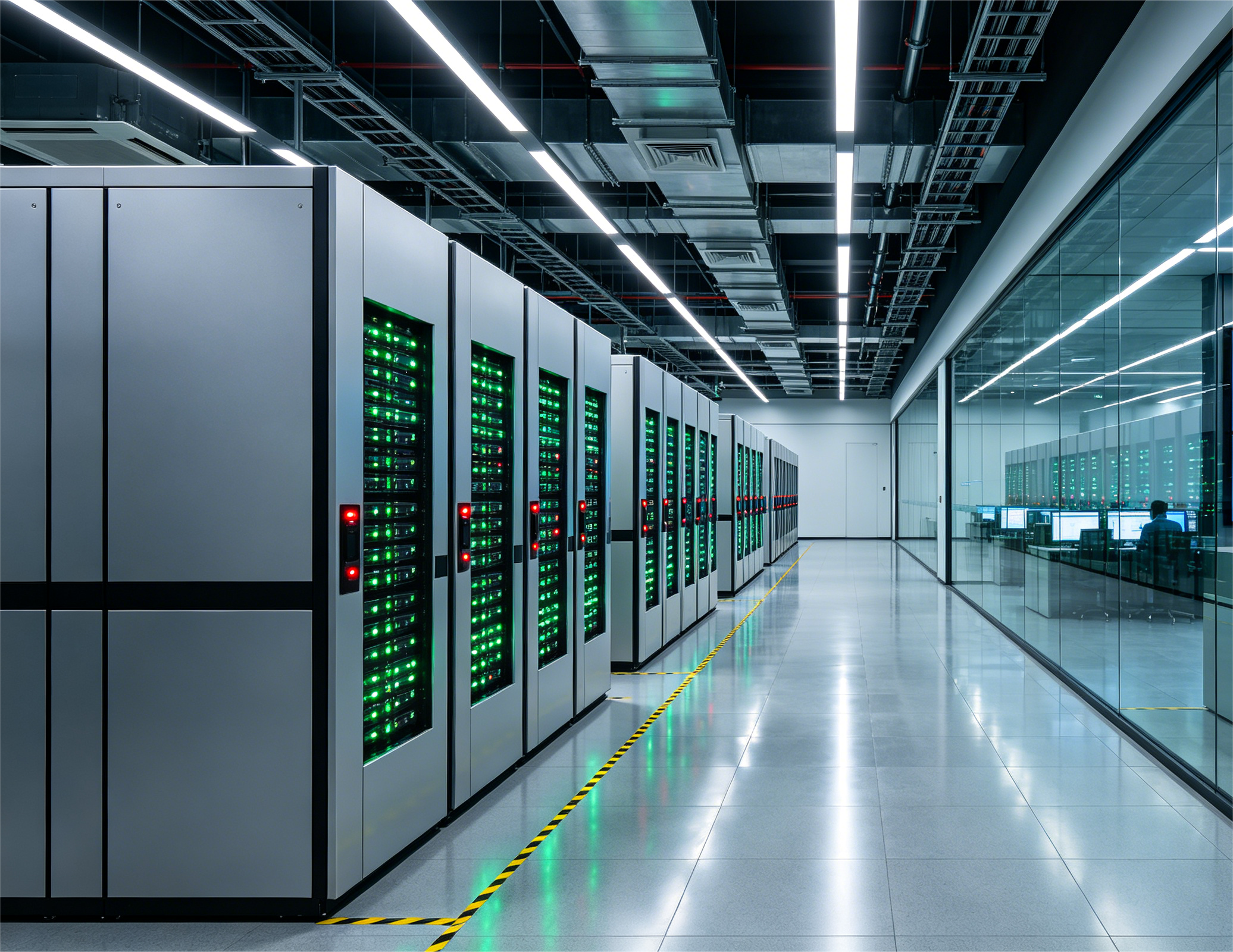
As data centers transition from support systems to production systems, faster deployment translates to faster returns. Currently, the typical time from planning to commissioning for most data centers in Chengdu is 9-12 months, but this is expected to be reduced to less than 6 months in the future .
In addition, some data centers adopt a fully modular construction concept, from component modularization to architecture modularization and data center modularization, ultimately achieving full modularization of the data center. This has advantages such as rapid deployment, flexible expansion, simple operation and maintenance, and high energy efficiency, further facilitating the rapid delivery of data centers.
Trend Six: Digitalization and Unmanned Intelligent Operation and Maintenance
Digitalization and automation are inevitable steps in the evolution of data center infrastructure. Data centers will evolve from single-domain digitalization, such as operation, energy saving, and maintenance, to full lifecycle digitalization and autonomous driving, encompassing planning, construction, operation, maintenance, and optimization.
For example, by using a DCIM (Dynamic Environmental Monitoring) system to monitor the operational status of a data center and provide early warnings of equipment failures, and by combining sensor networks with system analysis, millisecond-level monitoring of equipment can be achieved. Compared to the previous patrols by maintenance personnel, this can resolve security risks more quickly and accurately.
Trend Seven: Lithium Advances, Lead Retreats
lithium batteries have significant advantages in terms of space requirements and lifespan. As the cost of lithium batteries continues to decrease, they will be widely used in data centers in the future.
Trend 8: Wind-Liquid Fusion and “Wind Advances, Water Retreats”
The application of GPUs and NPUs has led to an increase in high-density scenarios, making liquid cooling systems increasingly common. However, some storage and computing services remain low-density scenarios. To adapt to uncertain future IT business needs, cooling solutions must be compatible with both air-cooled and liquid-cooled systems. Moreover, chilled water systems have a complex architecture, which is not conducive to rapid deployment and maintenance. In contrast, modular indirect evaporative cooling systems can shorten deployment time, reduce maintenance difficulty, and make full use of natural cooling resources, significantly reducing the power consumption of cooling systems. In climate-suitable regions, they will gradually replace chilled water systems.
Some high-level data centers adopt a combined air-liquid cooling solution, flexibly choosing between air cooling or liquid cooling for different business scenarios, while introducing an indirect evaporative cooling system, which effectively improves cooling efficiency and reduces operation and maintenance costs.