-
- APC Back UPS
- APC EASY UPS
- APC Modular UPS
- APC Smart SMC UPS
- APC Smart SMT UPS
- APC Smart SURT UPS
- APC SPM UPS
- APC Symmetra Power Module
- APC SYMMETRA LX
- APC Symmetra PX
- Eaton 5P UPS
- Eaton 5PX G2 UPS
- Eaton 93PR UPS
- Eaton 9PX Li-Ion UPS
- Eaton 9PX UPS
- Eaton 9SX Tower UPS
- Eaton DX RT UPS
- Eaton DX UPS
- Eaton Ellipse ECO UPS
- Eaton Marine UPS
- Eaton Power Module
- SANTAK UPS
- Schneider Galaxy 3L / EASY 3L UPS
- Schneider Galaxy VS UPS
- Schneider Galaxy VL UPS
- Vertiv UPS


Future Data Center UPS Demand ( Part 4)

3) It is bulky and difficult to install and maintain.
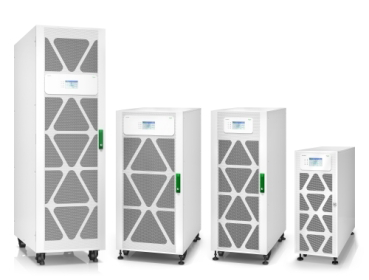
Traditional industrial frequency UPS systems typically employ a tower structure, and their built-in transformers often result in large, heavy UPS units that are difficult to transport and install. For high-power UPS systems, the excessive weight often necessitates the use of heavy machinery for hoisting; if transport aisles are narrow, it may even require breaking through the server room walls for handling. Therefore, once initially installed, expansion is virtually impossible. However, for rapidly growing businesses, especially internet companies, future uncertainties often require infrastructure with the ability to expand as needed, a requirement that traditional UPS systems clearly cannot meet. The introduction of Tencent’s micro-module concept and the widespread application of HVDC undoubtedly reflect this trend towards rapid construction, rapid expansion, and rapid maintenance.
The rapid rise of cloud computing and the widespread application of virtualization technology in recent years have further decoupled various applications from IT hardware. At the same time, affordable and user-friendly x86 servers are gradually replacing traditional minicomputers, and modular architecture has become a common trend in IT equipment. The “plug-and-play, replace when it breaks” maintenance model has further reduced the requirements for the number and skills of IT maintenance personnel. However, traditional tower UPS systems, once damaged, must be shut down for professional maintenance, resulting in high maintenance costs, long recovery times, and the risk of business interruption is significantly increased when a faulty UPS operates in bypass mode for extended periods. Traditional tower UPS systems have become a bottleneck restricting the stable operation of data centers.
What kind of UPS does a data center need?
First, it must be acknowledged that there are still significant differences in the understanding and application of UPS across different industries. The application of various solutions also varies from person to person, and there is no unified standard. However, under the premise of ensuring reliable power supply, the author believes that future data centers will place higher demands on power supply and distribution systems in the following aspects.
1) The first is “fast”, that is, rapid construction and rapid expansion.
Currently, the modular concept has been widely accepted in data center construction. Both modular data centers and containerized data centers embody this concept. Modular UPS systems also conform to this principle. From the perspective of overall deployment speed, there isn’t a significant difference between modular and tower UPS systems. However, in terms of future expansion and initial investment, modularity offers significant advantages. First, the on-demand power modules better meet the needs of business development. Especially for internet companies with an average lifespan of only 3 to 5 years, those who can complete deployment and expansion sooner can win customers and capture market share earlier. Compared to the one to two weeks installation time of traditional tower UPS systems, modular UPS systems can be expanded in just a few minutes. Second, increasingly fierce business competition, a volatile market environment, and uncertainties about future development require CEOs to find the optimal balance between long-term planning and initial investment. Modular structures only require reserving appropriate space, eliminating the need for a one-time investment. Future investments can be made in batches according to business development, significantly reducing operational risks. For customers, whether building their own or leasing, modular UPS systems are more suitable for the company’s long-term development.