-
- APC Back UPS
- APC EASY UPS
- APC Modular UPS
- APC Smart SMC UPS
- APC Smart SMT UPS
- APC Smart SURT UPS
- APC SPM UPS
- APC Symmetra Power Module
- APC SYMMETRA LX
- APC Symmetra PX
- Eaton 5P UPS
- Eaton 5PX G2 UPS
- Eaton 93PR UPS
- Eaton 9PX Li-Ion UPS
- Eaton 9PX UPS
- Eaton 9SX Tower UPS
- Eaton DX RT UPS
- Eaton DX UPS
- Eaton Ellipse ECO UPS
- Eaton Marine UPS
- Eaton Power Module
- SANTAK UPS
- Schneider Galaxy 3L / EASY 3L UPS
- Schneider Galaxy VS UPS
- Schneider Galaxy VL UPS
- Vertiv UPS


Future Data Center UPS Demand ( Part 3)

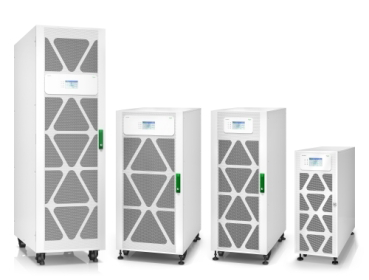
Multiple factors hinder the advancement of UPS technology. Compared to the rapid pace of technological updates in consumer electronics, the progress of power supply and distribution products for data centers has been significantly slower. This is primarily because the “infrastructure” nature of power supply and distribution products means that customers rarely replace them unless they break down. I myself have seen a UPS launched by Huawei more than ten years ago still in use in a carrier’s data center. Furthermore, some equipment manufacturers, driven by their own interests, have further hampered the application of new technologies in the UPS field. As a result, traditional line-frequency UPS units can still be frequently seen in newly built data centers in China.
2) The power supply equipment has been operating inefficiently for a long time, resulting in serious power waste.
For data centers, pursuing lower PUE and operating costs is a perpetual task for CIOs. The UPS input power supply system, consisting of input transformers and ATS switches, and the UPS power supply system, consisting of the UPS and its corresponding input and output distribution cabinets, account for approximately 10% of the total power consumption required by the data center. Of this, about 7% comes from the UPS power supply system and about 3% from the UPS input power supply system. For large data centers, reducing UPS power supply losses can effectively improve PUE and save on electricity costs.
In reality, for most data centers, the actual operating load rate of UPS systems rarely exceeds 40%. Especially for data centers with high reliability requirements, traditional power distribution systems are often designed with a 2N architecture, resulting in UPS operating load rates even lower than 20%. Furthermore, the actual efficiency of most traditional UPS systems at around 20% load is generally below 85%. Therefore, in actual data center operations, most UPS systems operate at low efficiency for extended periods, leading to significant electricity waste. It is estimated that for a small 200kW data center, increasing the actual operating efficiency of the UPS to over 95% could save 300,000 yuan in electricity costs annually.