-
- APC Back UPS
- APC EASY UPS
- APC Modular UPS
- APC Smart SMC UPS
- APC Smart SMT UPS
- APC Smart SURT UPS
- APC SPM UPS
- APC Symmetra Power Module
- APC SYMMETRA LX
- APC Symmetra PX
- Eaton 5P UPS
- Eaton 5PX G2 UPS
- Eaton 93PR UPS
- Eaton 9PX Li-Ion UPS
- Eaton 9PX UPS
- Eaton 9SX Tower UPS
- Eaton DX RT UPS
- Eaton DX UPS
- Eaton Ellipse ECO UPS
- Eaton Marine UPS
- Eaton Power Module
- SANTAK UPS
- Schneider Galaxy 3L / EASY 3L UPS
- Schneider Galaxy VS UPS
- Schneider Galaxy VL UPS
- Vertiv UPS


Why can servers run 365 days a year without shutting down, but your home computer can’t? ( Part 2)

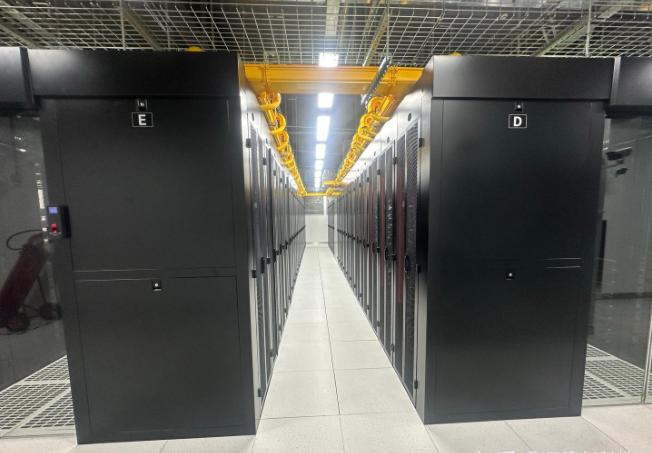
Why are servers not afraid of “unexpected downtime”?
For systems that have been running for a long time, the biggest enemy is sudden failure. To address this, servers typically have the following “self-rescue capabilities”.
1. IPMI /BMC Remote Management
IPMI (Intelligent Platform Management Interface) is a hardware management interface that is independent of the operating system. It can remotely view system status, restart, debug, and even install the system, and can handle system crashes.
2. Redundant architecture and disaster recovery design
• Dual power supply, dual network card, and dual CPU architecture ensure that a single point of failure does not affect the overall service.
• In a multi-node high-availability cluster, if one server fails, the other nodes take over the tasks.
3. UPS Uninterruptible Power Supply + Generator
These advanced data centers are equipped with 2N redundant UPS and high-power lead-acid batteries, as well as diesel generator sets .
In such an environment, even if the mains power fails, the UPS can support the server to run for tens of minutes to several hours, which is enough to start a diesel generator to provide power.
Who is the unsung hero behind the server’s “perpetual motion”?
The continuous operation of a server depends not only on powerful hardware and a stable system, but also on the maintenance done behind the scenes!
1. Maintenance personnel are on duty 24/7.
• Monitoring systems (Zabbix, Prometheus, Nagios) track load, temperature, and disk utilization in real time.
• The logging system collects and analyzes exception logs.
• Automatic alarm system (SMS, WeChat, DingTalk)
2. Regular patching + system hot-upgrade
For example, the Linux kernel supports Live Patch, which allows security patches to be applied without rebooting, thus avoiding the risk of system crashes.
3. Automated script-based inspection and repair
Use scripts to automatically restart malfunctioning services, clean up temporary files, and release cache, ensuring the system is “clean and new”.
Are servers really never shut down?
Although “theoretically, it’s not necessary to shut down the server,” in practice, maintenance personnel will periodically and systematically restart the server for reasons including:
• Security patches require a kernel reboot
• After long-term system operation, cache bloat and file handle exhaustion can occur.
• Hardware aging risk, requiring repair.
Businesses typically perform rolling restarts of certain nodes at night or during off-peak hours to ensure “uninterrupted business operations”.
Summarize
The ability of servers to run for extended periods without shutting down is not the result of a single cutting-edge technology, but rather a result of a well-coordinated system engineering effort across various levels. This is precisely the core foundation that allows cloud platforms such as Alibaba Cloud, Tencent Cloud, and AWS to support global business operations without downtime for milliseconds.
So stop looking at servers with the same eyes as home computers; they are “iron warriors” that can withstand high pressure all year round without blinking .