-
- APC Back UPS
- APC EASY UPS
- APC Modular UPS
- APC Smart SMC UPS
- APC Smart SMT UPS
- APC Smart SURT UPS
- APC SPM UPS
- APC Symmetra Power Module
- APC SYMMETRA LX
- APC Symmetra PX
- Eaton 5P UPS
- Eaton 5PX G2 UPS
- Eaton 93PR UPS
- Eaton 9PX Li-Ion UPS
- Eaton 9PX UPS
- Eaton 9SX Tower UPS
- Eaton DX RT UPS
- Eaton DX UPS
- Eaton Ellipse ECO UPS
- Eaton Marine UPS
- Eaton Power Module
- SANTAK UPS
- Schneider Galaxy 3L / EASY 3L UPS
- Schneider Galaxy VS UPS
- Schneider Galaxy VL UPS
- Vertiv UPS


Why can servers run 365 days a year without shutting down, but your home computer can’t? ( Part 1)

In the general public’s perception, computers are prone to lag, overheating, or even blue screen crashes when running for a long time.
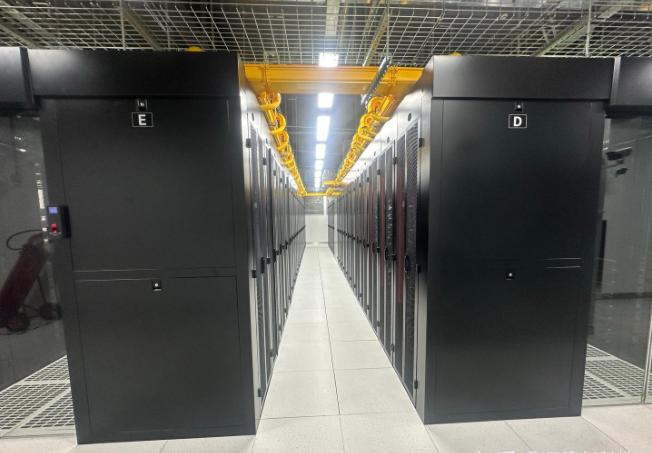
The servers in the data center can run 24/7, non-stop, and even go for years without shutting down. This has led many to wonder: why are servers so “resilient”? What is the fundamental difference between them and our home computers?
A server is not a “high-end computer”.
Many people think that a server is just a “more expensive and larger computer,” which is a misconception. Although they both belong to the category of “computing devices,” they have taken different paths from the very beginning of their design philosophy.
Ordinary computers are designed to serve “people,” emphasizing interactivity, multimedia performance, and user-friendly interfaces.
However, servers serve “enterprise business” and prioritize stability, throughput, and high concurrency processing.
It can be said that every detail of the server serves one purpose: to operate stably and unattended for extended periods.
Why can server hardware have such long standby times?
1. ECC memory protection safeguards data security
ECC (Error-Correcting Code) memory is a technology that can automatically detect and correct 1-bit memory errors, effectively preventing system crashes caused by soft errors (such as cosmic ray interference or transient voltage fluctuations).
Non-ECC memory used in ordinary computers can cause a system blue screen if it malfunctions, while servers rely on ECC to support their “data lifeline”.
2. High-reliability power supply configuration, supports hot-swapping
Servers are typically equipped with dual redundant power supplies (PSUs), so even if one power supply module fails, normal operation will not be affected. Furthermore, the power supply can be replaced while the server is running; this is known as hot-swapping.
3. Multi-hard drive RAID array to prevent downtime
With a RAID configuration, even if one hard drive fails, the server can still operate normally, and data security remains unaffected. For example, RAID 1 enables hard drive mirroring, while RAID 5 offers automatic recovery.
4. Industrial-grade motherboard and capacitor/resistor components
Unlike consumer-grade motherboards, server motherboards use higher-grade materials, have stronger soldering, and can withstand higher temperatures, higher loads, and have a longer lifespan.
5. Professional heat dissipation, hot air channel design
High-density rack server chassis are designed with a unified airflow channel and multiple fans in parallel, making their air cooling efficiency far superior to that of home chassis. In fact, many data centers are now starting to use liquid cooling systems, which have even higher heat dissipation efficiency.
6. The operating system is also not “ordinary stuff”.
Servers typically run highly stable Server-version operating systems , such as:
• Windows Server series
• Ubuntu Server, CentOS, Debian, Rocky Linux, etc.
• Commercial systems such as RHEL (Red Hat Enterprise Linux) and SUSE Linux Enterprise
Unlike desktop systems, the biggest characteristic of server systems is “stability” rather than “coolness,” which is the basis for their ability to remain operational for extended periods.