-
- APC Back UPS
- APC EASY UPS
- APC Modular UPS
- APC Smart SMC UPS
- APC Smart SMT UPS
- APC Smart SURT UPS
- APC SPM UPS
- APC Symmetra Power Module
- APC SYMMETRA LX
- APC Symmetra PX
- Eaton 5P UPS
- Eaton 5PX G2 UPS
- Eaton 93PR UPS
- Eaton 9PX Li-Ion UPS
- Eaton 9PX UPS
- Eaton 9SX Tower UPS
- Eaton DX RT UPS
- Eaton DX UPS
- Eaton Ellipse ECO UPS
- Eaton Marine UPS
- Eaton Power Module
- SANTAK UPS
- Schneider Galaxy 3L / EASY 3L UPS
- Schneider Galaxy VS UPS
- Schneider Galaxy VL UPS
- Vertiv UPS


UPS is not just a “spare box” ( part 1)

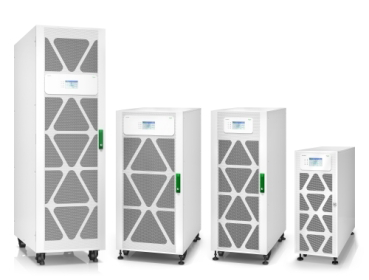
In the server room, there are two things that are most easily overlooked, yet can determine the life or death of a business in an instant: one is the precision air conditioner , and the other is the UPS.
Many maintenance colleagues still perceive UPS as “just a box that can provide power for a short time during a power outage.” They glance at it during routine inspections and move on until the moment the mains power suddenly fails—servers rebooting en masse, storage alarms going off like crazy, switch configurations rolling back inexplicably, and the entire department working through the night to put out the fire—only then do they realize: UPS is never just a supporting role in the server room, but the last line of defense for protecting business operations.
I. Two Hidden Risks of UPS
Data center power risks are never limited to power outages. The most obvious are planned power outages, line faults, and power rationing—these are things that most people are prepared for. But the most easily overlooked, and the ones that most often cripple operations, are two other hidden risks.
First, there’s the issue of abnormal voltage. Sudden voltage drops, excessive surges, and frequent fluctuations can cause servers to silently crash, malfunction, or restart unexpectedly, even if the mains power is on. Often, when business problems arise, you can’t even pinpoint the root cause.
Secondly, there’s the millisecond-level black hole of power switching. Even a mere tens of milliseconds of interruption—from mains power to generator, from mains to backup lines—is enough to trigger a “fatal reboot” for core servers and storage devices. UPS systems are designed to address these unseen power risks.
II. What are the three core types of UPS?
90% of UPS selection errors stem from not understanding its three core types. Choosing the wrong model is a waste of time and effort.
The first type is the standby UPS . It is normally powered by mains power and only switches to battery power when there is a power outage. It has a switching time of 5-10ms. Its advantages are low price and simple structure, but it is only suitable for home NAS and single office computer. It should never be used in core equipment in the data center.
The second type is the online interactive UPS . It has basic voltage stabilization function, shorter switching time, and moderate cost. At most, it can be used for access layer switches and non-core business servers in small data centers. It is “barely usable, but don’t expect it to withstand core risks.”
The third type, and the only correct solution for data centers, is the online double-conversion UPS . Its working logic is to first rectify the mains power into DC, then invert it into clean AC to power the equipment. The load always draws on the “clean” electricity after inversion. It achieves zero switching time, completely isolates the voltage and frequency fluctuations of the mains power, and its stability far surpasses the first two types. Don’t ask, “Interactive UPSs can also handle power outages, why choose an online one?” The answer is simple: being able to withstand power outages doesn’t mean you can withstand daily power contamination. For core switches, firewalls, storage, and virtualization platforms, there is no alternative to an online UPS.