-
- APC Back UPS
- APC EASY UPS
- APC Modular UPS
- APC Smart SMC UPS
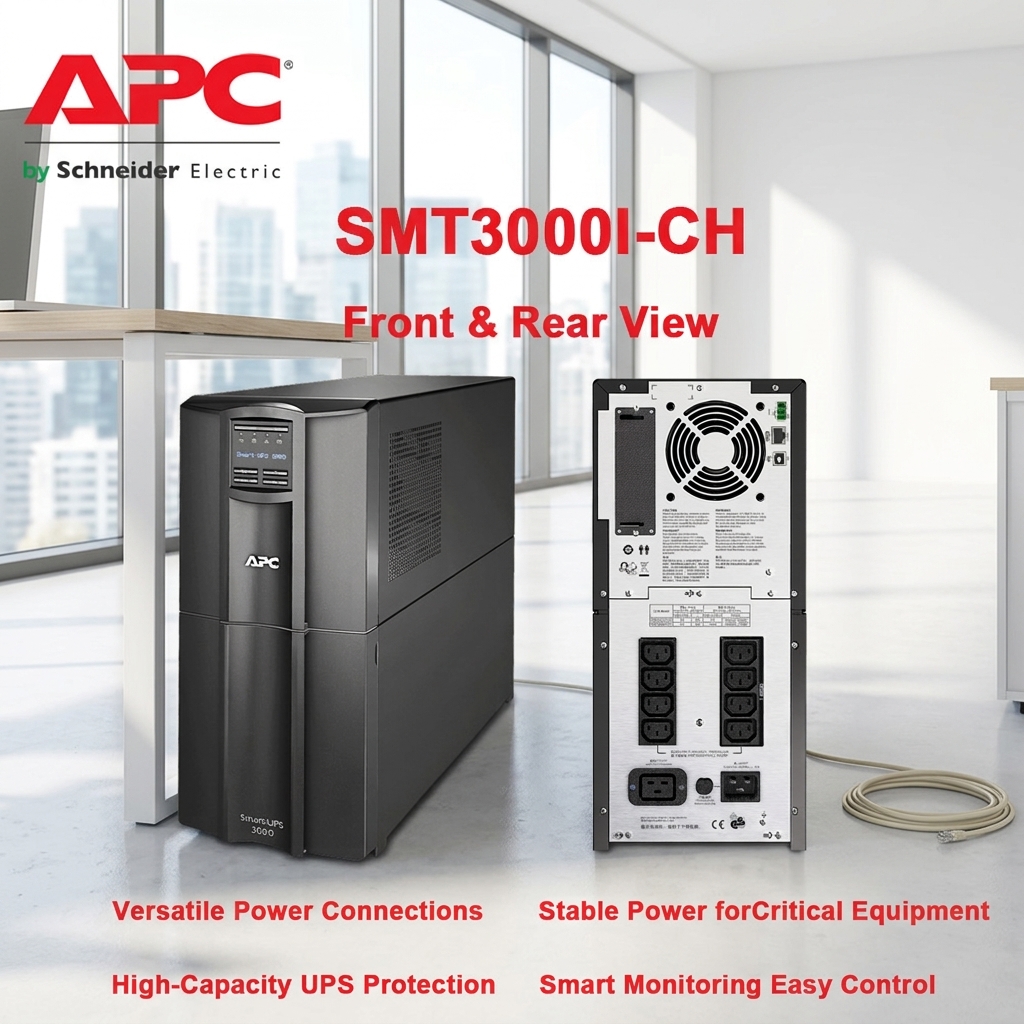
- APC Smart SMT UPS
- APC Smart SURT UPS
- APC SPM UPS
- APC Symmetra Power Module
- APC SYMMETRA LX
- APC Symmetra PX
- Eaton 5P UPS
- Eaton 5PX G2 UPS
- Eaton 93PR UPS
- Eaton 9PX Li-Ion UPS
- Eaton 9PX UPS
- Eaton 9SX Tower UPS
- Eaton DX RT UPS
- Eaton DX UPS
- Eaton Ellipse ECO UPS
- Eaton Marine UPS
- Eaton Power Module
- SANTAK UPS
- Schneider Galaxy 3L / EASY 3L UPS
- Schneider Galaxy VS UPS
- Schneider Galaxy VL UPS
- Vertiv UPS



A Comprehensive Guide to UPS Uninterruptible Power Supply Connection Methods( Part 5)

Chapter 7: Common Connection Errors That Must Be Avoided
Incorrect connections can cause minor issues like malfunctioning protection functions, or, in my opinion, serious issues like (and potentially very serious ones) security incidents. The following six common mistakes must be strictly avoided: Frankly, this is a highly valued point in professional fields.
Its abnormal handling mechanism is highly regarded in the industry, causing the UPS to run under overload for a long time, thus leaving no backup power during a power outage. The sixth is the omission of data lines, leading to mutual interference. The fifth is neglecting battery connections, losing the final guarantee of automatic safe shutdown. Forgetting to connect the external battery pack or having a loose interface can cause instantaneous failure during a power outage. The second is cascading errors, the first being overload connections that form a loop, i.e. (which I deeply feel is indispensable) plugging the output of one UPS into the input of another, connecting inductive loads like printers to the same UPS as precision servers, which easily leads to failure. The third is poor grounding; if the UPS itself or connected equipment is not properly grounded, the management software will not work, there is a risk of electric shock, and the surge protection effect is greatly reduced. The fourth is mixing different load types to help make more accurate judgments and selections.
I only understood after being tortured a thousand times. Have you noticed this? And is the management software alarming correctly? Perform a simulated power outage test (unplug the UPS’s AC input). After reconnecting, verify that the main equipment is functioning properly, ensuring… the ventilation holes are unobstructed. Please perform a simple safety check: confirm all plugs are securely inserted. This demonstrates its remarkable quality.