-
- APC Back UPS
- APC EASY UPS
- APC Modular UPS
- APC Smart SMC UPS
- APC Smart SMT UPS
- APC Smart SURT UPS
- APC SPM UPS
- APC Symmetra Power Module
- APC SYMMETRA LX
- APC Symmetra PX
- Eaton 5P UPS
- Eaton 5PX G2 UPS
- Eaton 93PR UPS
- Eaton 9PX Li-Ion UPS
- Eaton 9PX UPS
- Eaton 9SX Tower UPS
- Eaton DX RT UPS
- Eaton DX UPS
- Eaton Ellipse ECO UPS
- Eaton Marine UPS
- Eaton Power Module
- SANTAK UPS
- Schneider Galaxy 3L / EASY 3L UPS
- Schneider Galaxy VS UPS
- Schneider Galaxy VL UPS
- Vertiv UPS


Don’t understand data centers? This ultimate introductory guide is easy to understand even for beginners ( part 3)

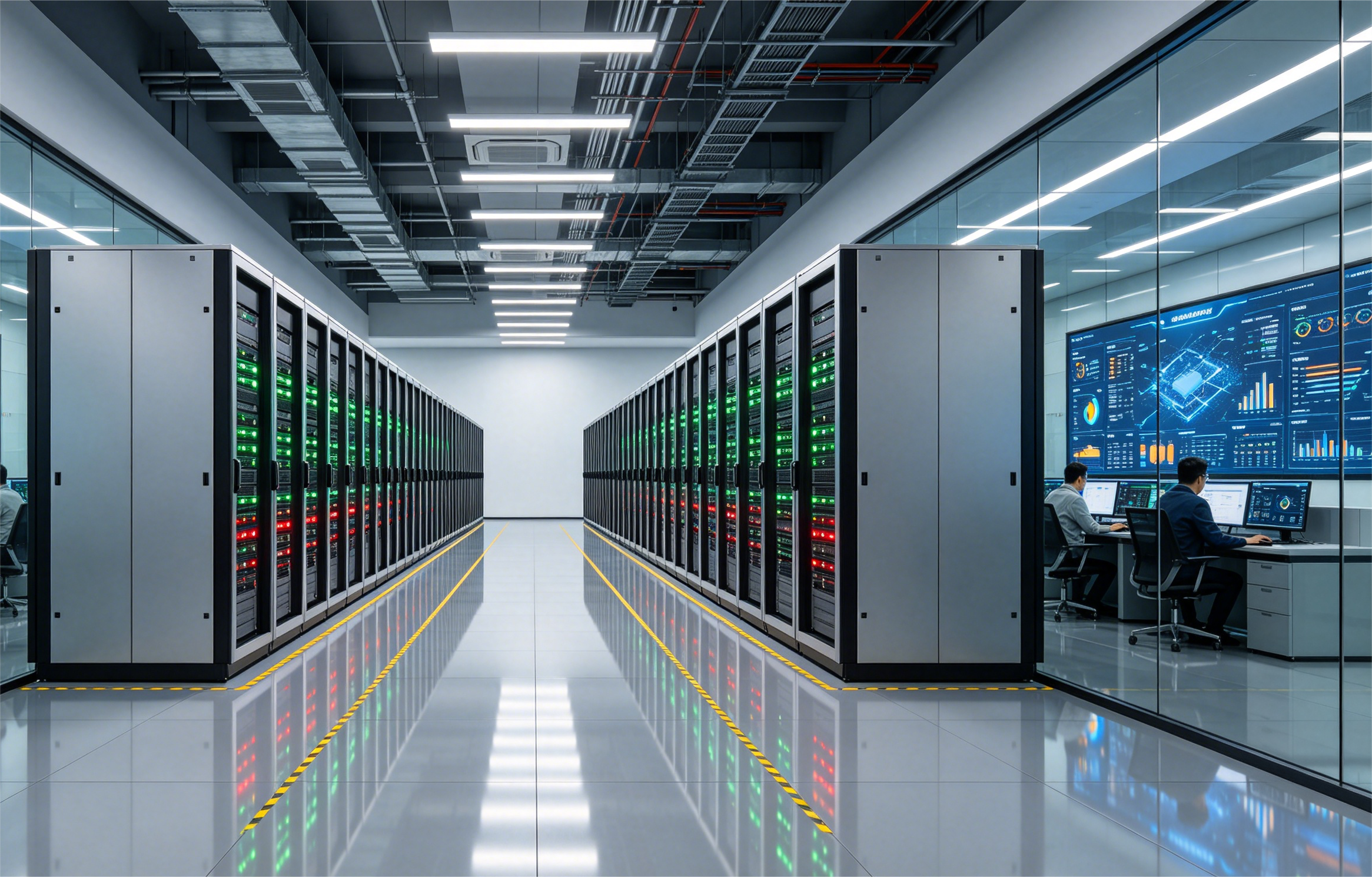
Cooling system
Currently, data center cooling mainly includes two methods: air cooling and liquid cooling.
Regarding air cooling, it’s worth mentioning that near-end cooling methods such as rack-level pool-level, row-level, and rack-level are emerging and becoming the mainstream choice for newly built data centers.
Traditional cooling is room-level, air conditioning the entire computer room. This method has too long a cooling path, is too inefficient, cannot meet the heat dissipation needs of high-power devices, and consumes a lot of energy.
Rack pool, row, and rack level are heat dissipation designs centered around a rack pool, a row of racks, or a single rack.
The rack-level cooling system is designed with a row of racks as the target for airflow design.
This method significantly shortens the airflow path and results in high heat dissipation efficiency.
Liquid cooling uses liquid as a refrigerant to cool and dissipate heat.
From a noise perspective, liquid cooling reduces noise by 20-35 decibels compared to air cooling at the same heat dissipation level. From an energy consumption perspective, liquid cooling saves 30%-50% of electricity compared to air cooling. Currently, liquid cooling technology is widely favored by the industry, but it is still in the exploratory stage. Overall, the market prospects for liquid cooling are very broad, with a market size reportedly exceeding 100 billion yuan.
Environmental monitoring system
Environmental monitoring refers to the monitoring of power and the environment, and the real-time monitoring and management of the data center’s operating status.
DCIM , short for Data Center Infrastructure Management, has evolved from traditional environmental monitoring systems.It was coined by the renowned consulting firm Gartner. Its management scope is more comprehensive, employing tools to monitor, manage, and control all major IT equipment and supporting infrastructure within the data center.
Fire protection system
Data center fire suppression systems are quite interesting. Because server rooms contain electronic equipment, in the event of a fire, you certainly can’t directly spray water, foam, or dust.
So what can we do? Extinguish the fire with gas .
After a fire occurs, the alarms of the fire and smoke sensors will sound. Then, the computer room area can release inert gases such as argon and nitrogen to deprive the flames of oxygen and extinguish the fire (it can be done in about tens of seconds).
Modular Data Center
In recent years, in order to deploy data centers more quickly and flexibly, manufacturers have introduced the concept of modular data centers.
Simply put, it involves integrating the data center’s structural system, power supply and distribution system, HVAC system, fire protection system, lighting system, and structured cabling, turning them into individual “building blocks.” Then, after transporting these “building blocks” to the site, they are simply hoisted and assembled to complete the construction and deployment.
Using this method, the construction cycle of large data centers has been reduced from 18-24 months to about 6 months, resulting in significant economic benefits.