-
- APC Back UPS
- APC EASY UPS
- APC Modular UPS
- APC Smart SMC UPS
- APC Smart SMT UPS
- APC Smart SURT UPS
- APC SPM UPS
- APC Symmetra Power Module
- APC SYMMETRA LX
- APC Symmetra PX
- Eaton 5P UPS
- Eaton 5PX G2 UPS
- Eaton 93PR UPS
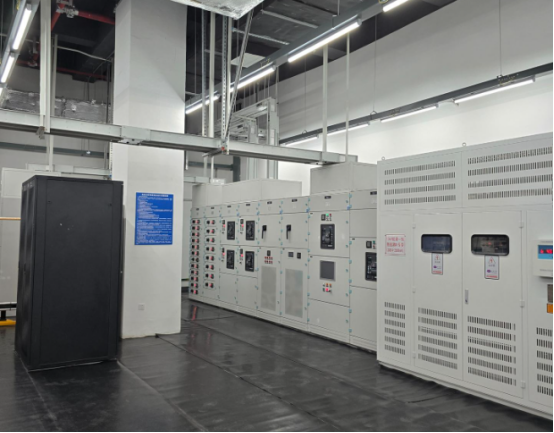
- Eaton 9PX Li-Ion UPS
- Eaton 9PX UPS
- Eaton 9SX Tower UPS
- Eaton DX RT UPS
- Eaton DX UPS
- Eaton Ellipse ECO UPS
- Eaton Marine UPS
- Eaton Power Module
- SANTAK UPS
- Schneider Galaxy 3L / EASY 3L UPS
- Schneider Galaxy VS UPS
- Schneider Galaxy VL UPS
- Vertiv UPS


60 Data Center Basics ( Part 1)

Data centers undertake critical tasks such as data storage, computing, and transmission, serving as the “digital heart” of enterprise operations.
I. Basic Concepts of Data Centers
1. Definition of a data center: A physical location or virtualized environment in which IT equipment such as servers, storage, and networks are centrally deployed to provide data processing, storage, and transmission services.
2. Data Center Classification: By size, they are classified as large (≥5000 racks), medium (500-5000 racks), and small (<500 racks); by purpose, they are classified as enterprise-level, internet-level, and cloud computing-level.
3. Tier Standard : A data center availability classification developed by the Uptime Institute, with Tier I to IV corresponding to different levels of redundancy and fault tolerance.
4. Data Center Lifecycle: Covering five stages: planning and design, construction and deployment, operation and maintenance, upgrade and renovation, and decommissioning and recycling.
5. Modular design: The data center is divided into independent functional modules (such as power supply, cooling, and network), which supports flexible expansion and rapid deployment.
6. Data center ecosystem: including infrastructure providers, IT equipment manufacturers, cloud service providers, operation and maintenance service providers, and industry users.
7. Data Center Role: Supporting core business operations such as enterprise digital transformation, cloud computing services, artificial intelligence computing, and IoT data processing.
8. Edge Data Center: A small data center deployed close to the data source to reduce latency and process real-time data (such as 5G base stations and industrial sites).
9. Hyperscale data centers: These have more than 100,000 servers and are operated by tech giants such as Google and Amazon, emphasizing automation and energy efficiency optimization.
10. Green Data Center : An environmentally friendly data center that reduces PUE (Power Usage Effectiveness) through energy-saving technologies, renewable energy, liquid cooling, and other means .
II. Data Center Infrastructure
11. Data center site selection: Geological stability, power supply, network conditions, climate environment and policy compliance need to be considered.
12. Building structure: The building adopts earthquake-resistant design, fireproof materials, and anti-static flooring to ensure physical safety and equipment stability.
13. Rack: Standard 19-inch rack, available in open, cold aisle closed, and micro-module types, supporting equipment installation and cable management.
14. Power supply and distribution system: including mains power input, UPS uninterruptible power supply , diesel generator, and distribution cabinet to ensure continuous power supply.
15. UPS (Uninterruptible Power Supply): When the mains power is interrupted, it maintains the power supply to the equipment through the battery pack. Common types include online and standby types.
16. Diesel generator: As a backup power source for the UPS, it starts up during prolonged power outages to ensure the operation of critical equipment.
17. PDU (Power Distribution Unit): A power distribution device in the cabinet that supports multiple outputs and remote monitoring.
18. Refrigeration system: air-cooled (air conditioning unit), water-cooled (chiller + cooling tower), liquid-cooled (immersion/cold plate type), to maintain the operating temperature of the equipment.
19. Thermal Management: By isolating hot and cold aisles and optimizing airflow organization, the risk of hot spots is reduced and the cooling efficiency is improved.
20. Fire suppression system: Employs gaseous fire suppression (heptafluoropropane, IG541) and early smoke detection to prevent water damage from affecting equipment.